Reflections on 총각무/ponytail radish
총각무 (chonggak-mu) by Amy Yoon
The ponytail radish, in Korean either 총각무 (chonggak-mu) or 알타리무 (altari-mu), is one of a variety of Korean radishes, generically known as 무 (mu). I’ve learned to distinguish them from other radishes by their small and stout white taproots that end in a wider, circular base. It’s said that the radish is called 총각무 (chonggak-mu) in Korean because its root looks similar to the double topknot that young unmarried men, or 총각 (chonggak), traditionally wore.
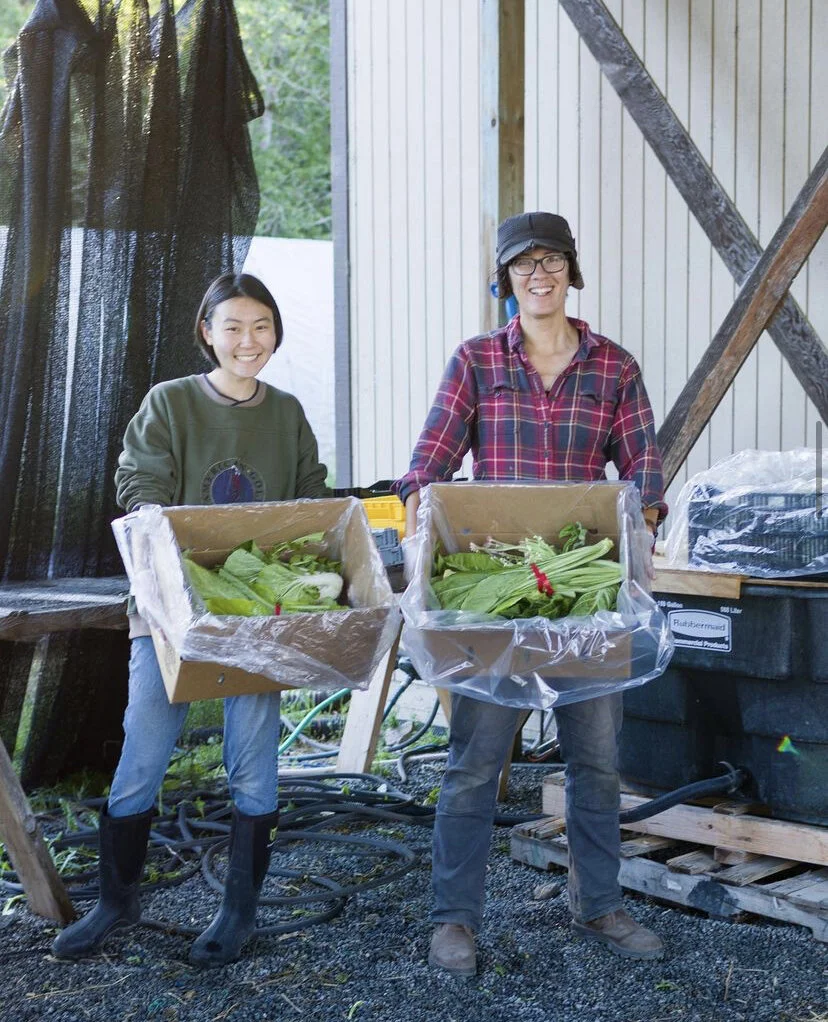
On the farm, we’ve been growing Kitazawa’s Chong Gak type Sushiro hybrid, which is a cool season annual and can be grown throughout the year in mild climates. The radish was directly seeded into the bed in late March, and I’ve been harvesting them for the last month. Over time, I've been encountering some issues with the radishes, including cracks in the base as they’ve been growing older and larger and a greater number of blackened, wrinkled and withered roots. It seems to be a consequence of black root disease, which is caused by the fungus Aphanomyces raphani in the soil. The treatment options largely consist of cultural control, such as crop rotation every 3 to 4 years, ensuring good drainage and not overwatering, and using varieties specifically resistant to this disease.
During my internship, I was also able to use some of the chonggak-mu from the field. Two of the dishes that chonggak mu is commonly used for in Korean cooking are chonggak kimchi, or 총각김치, and siraegi soup, or 시래기국 (siraegi-guk). Chonggak kimchi was first seen in written word around 1600-1700 A.D. I was able to continue with tradition and the larger Korean fermentation tradition by making kimchi with a Korean earthenware crock that my aunt had given me. She often makes kimchi but does not use measurements so she shared with me Maangchi’s recipe for chonggak kimchi. The radishes were cleaned, salted, then seasoned and are still fermenting. The other dish that chonggak-mu is often used in is siraegi soup, in which the radish greens are used either dried or fresh with a base of fermented soybean paste.
Growing up, I heard the Korean word for radish, or 무 (mu), in the context of many dishes we ate. This included everything from the pickled yellow radish we would eat in gimbap and on the side with jjajangmyun to the pickled white cubes of radish with Korean fried chicken and the spicy radish salad with bossam to all kinds of spicy and fresh radish kimchis. Often I didn’t even know what the radish I was eating sliced and cut, pickled and fermented looked like out of the ground, and so I especially liked working with the chonggak-mu that I had seen emerge from seed to plant and that I had harvested with my own hands.