BITTERMELON LEAF TEA Dried 苦瓜 - Organic
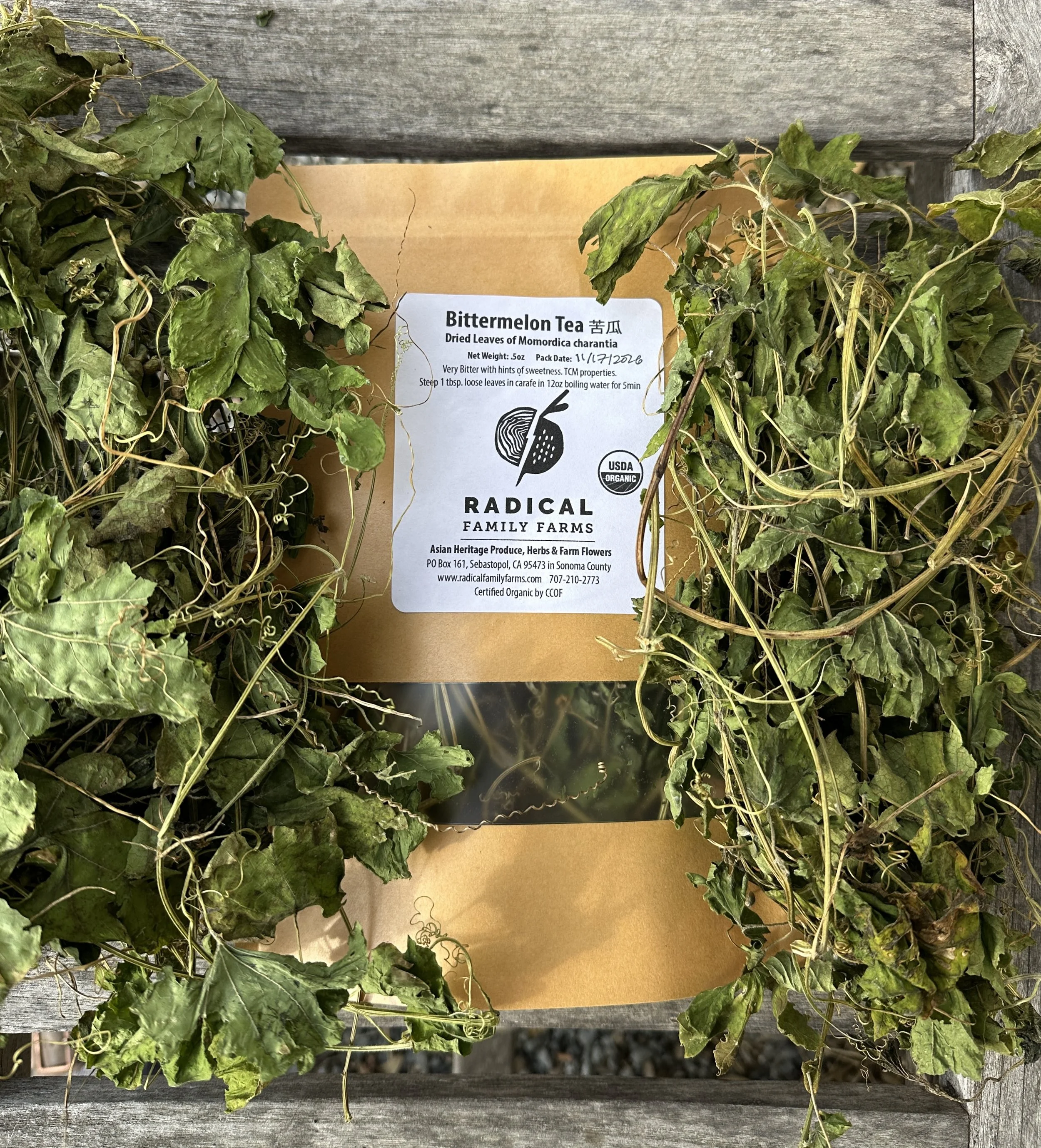
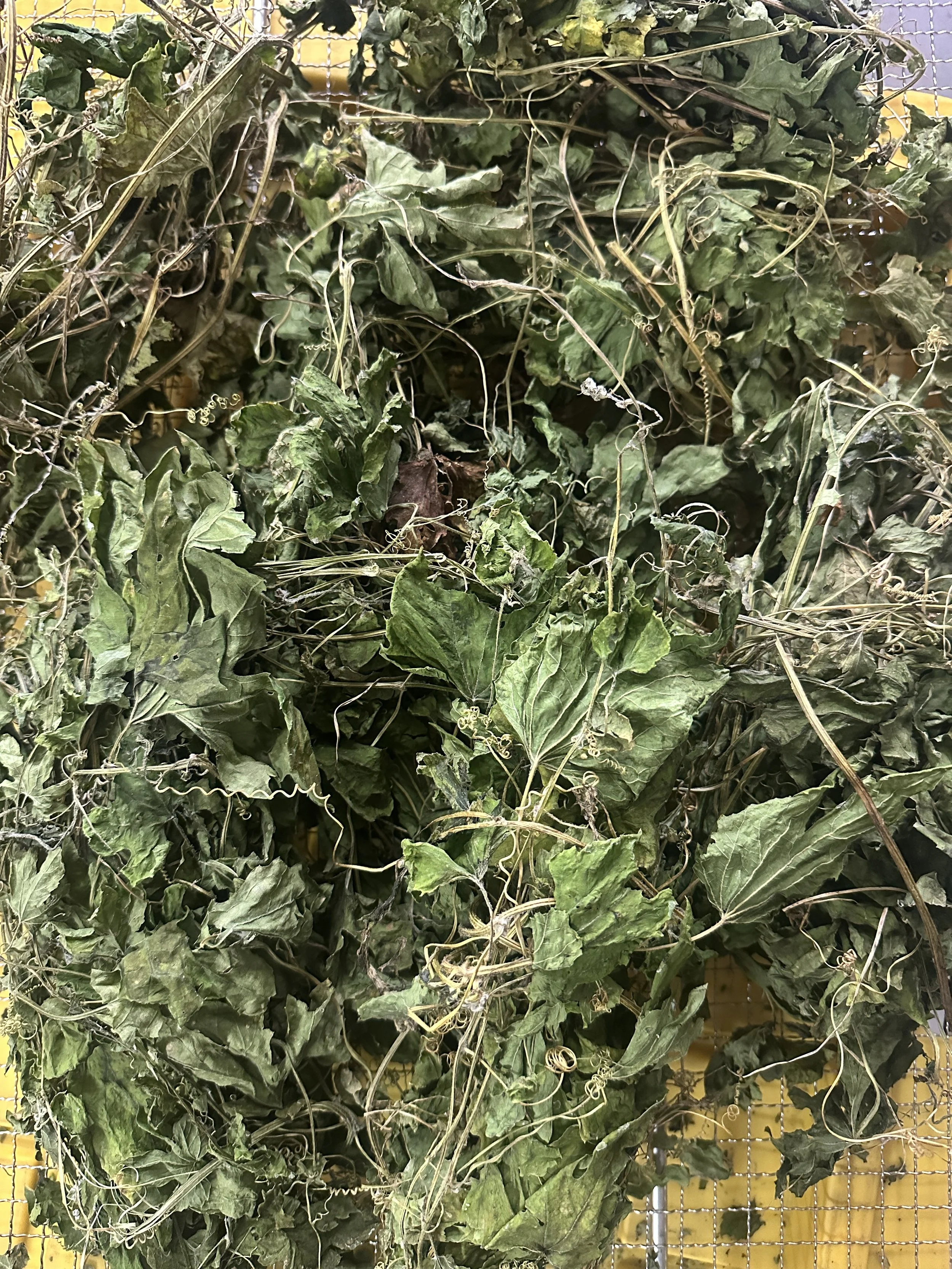


BITTERMELON LEAF TEA Dried 苦瓜 - Organic
DRIED BITTERMELON LEAF TEA 苦瓜
2026 Harvest · Certified Organic (CCOF) · Grown in Sebastopol, Sonoma County
Dried leaves of Momordica charantia
0.5 oz bag · [$12] · makes approximately [10–14] cups
Meet the leaf
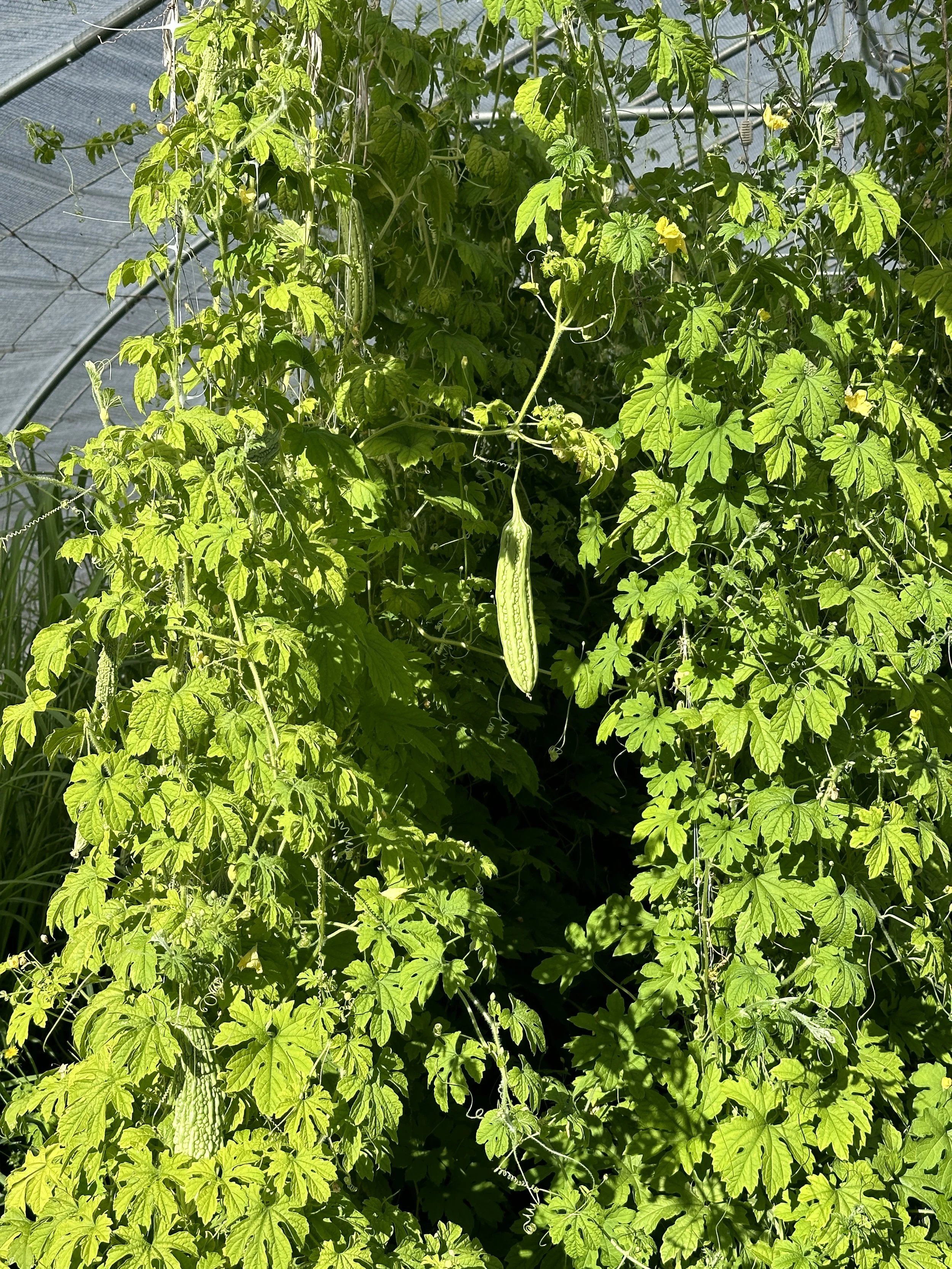
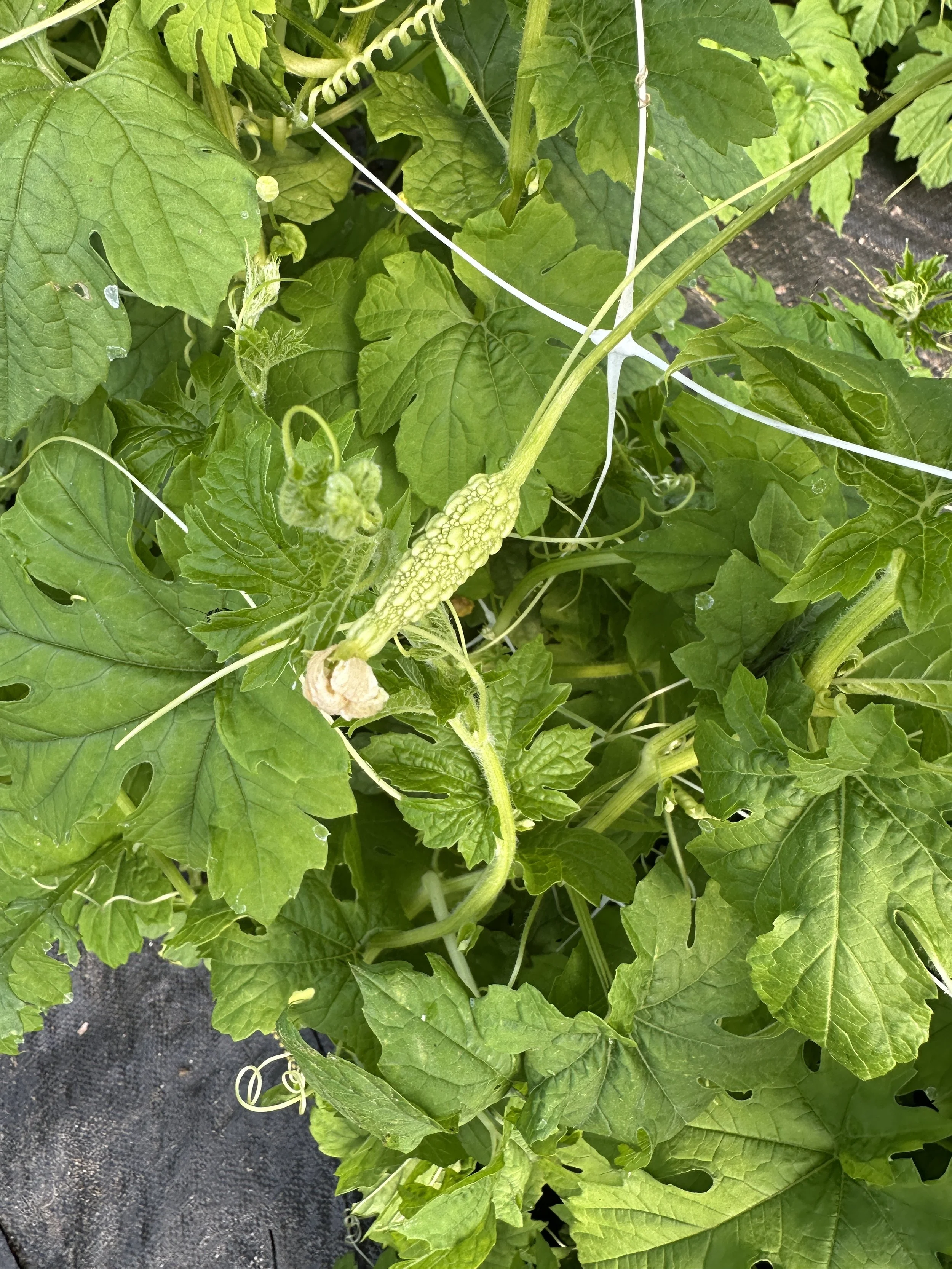
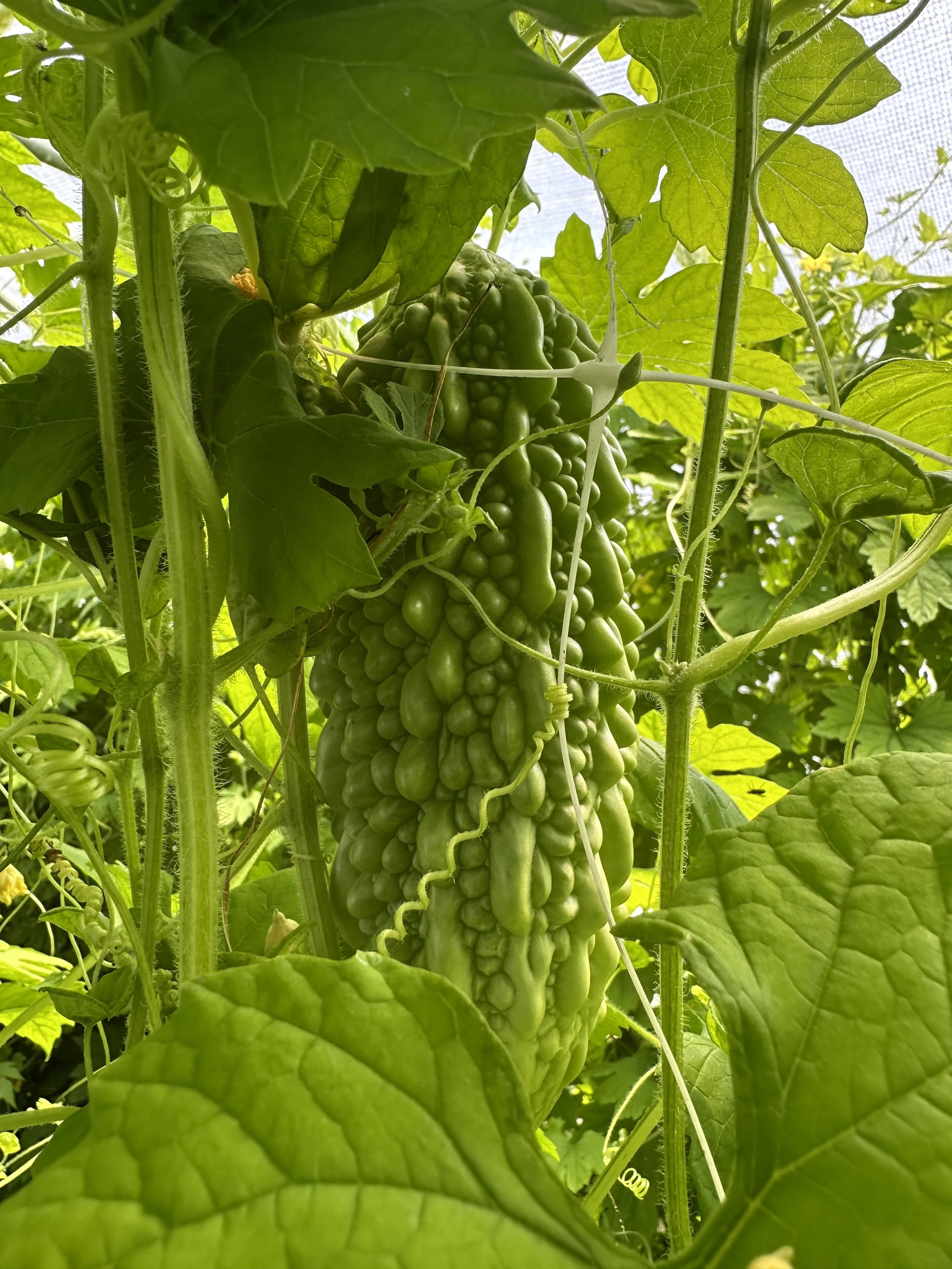
Most people know bittermelon (苦瓜, kǔguā) for its bumpy green fruit — the one your grandmother stir-fried with black bean and pork, or stuffed and simmered in broth. But the vine itself is a treasure too. Every summer our bittermelon plants climb our trellises in Sebastopol, throwing out deeply lobed leaves, curly tendrils and little yellow flowers. This year we harvested those leaves at their peak, dried them gently, and packed them whole so you can brew them the way families across Asia, the Caribbean, Africa and Latin America have for generations.
This is a tea with roots in a lot of kitchens. In Chinese homes it's 苦瓜茶. In the Philippines it's dahon ng ampalaya. In Vietnam it's lá khổ qua. In Jamaica it's cerasee, and in Haiti it's asosi. Wherever your family comes from, there's a good chance someone in it swore by a cup of this.
Flavor
Let's be honest: it's very bitter. That's the point. Bittermelon leaf brews into a deep golden-green cup with a bold, green, herbaceous bitterness up front — then, if you sit with it, a surprising hint of sweetness on the finish. It's a tea that wakes up your whole palate. Bitter-tea lovers will be thrilled; first-timers may want to start with a lighter steep or a little honey or rock sugar.
Traditional uses
In Traditional Chinese Medicine, bittermelon is considered a cooling food — bitter in taste and used to clear heat, which is why it's a summer staple in southern China. Across the Caribbean, cerasee and asosi tea is a classic "bush tea": taken as a bitter tonic and cleanse, and a go-to family remedy. In the Philippines, the leaves are cooked into dishes like ginisang monggo (sautéed mung beans) as well as brewed. Many cultures drink bitter teas like this one after rich meals or as part of a seasonal reset.
Around the world
Bittermelon leaves are part of family traditions on several continents, and not only as a tea:
Haiti: Asosi is one of the best-known plants in Haitian folk medicine. The leaves and vines are boiled into a strong tea, added to herbal baths, or crushed and rubbed on the skin. Families use it traditionally to "clean the blood" and to soothe itchy, dry skin.
Jamaica and the English-speaking Caribbean: Cerasee is the classic bush tea. The leaves also go into a "bush bath" for itchy, irritated skin.
Dominican Republic, Venezuela and Central America: Cundeamor and sorosí leaves are crushed or soaked in water and used in baths for the skin.
Trinidad & Tobago, Antigua and Costa Rica: The leaves and vines are boiled into a warm drink when a cold comes on.
West Africa: Leaf tea is a traditional bitter tonic in Nigeria and Ghana. Across Africa, the leaves are also pounded into pastes, and the dried plant is ground into a powder and mixed with oils for the skin.
Philippines: Dahon ng ampalaya are cooked as a vegetable in ginisang monggo (sautéed mung beans), and juice pressed from the leaves is a traditional cough remedy.
Vietnam: Lá khổ qua tea, especially from wild bittermelon, is a classic heat-clearing drink.
These statements have not been evaluated by the Food and Drug Administration. This product is not intended to diagnose, treat, cure or prevent any disease.
Please note: Bittermelon is traditionally avoided during pregnancy, while trying to conceive, while breastfeeding, and for young children. Bittermelon may lower blood sugar — if you take medication for diabetes or blood sugar, talk with your healthcare provider before drinking it regularly.
How to brew
Hot: Steep 1 tbsp loose leaves in a carafe with 12 oz boiling water for 5 minutes. Strain and enjoy. Want it gentler? Steep for 2–3 minutes, or use more water. Leaves can be re-steeped for a second, lighter cup.
Cold brew: Add 1 tbsp leaves to 16 oz cold water and refrigerate 6–8 hours. Cold brewing pulls out less bitterness and more of the sweet, green notes — a great summer drink.
With rock sugar or honey: A small piece of rock sugar (冰糖) is the classic way to soften the bitterness without hiding it.
Blend it: Try it with a pinch of our Bó Júhuā chrysanthemum tea for a floral, cooling combination.
Herbal bath, Caribbean style: In the bush-bath tradition of Haiti and Jamaica, steep 2–3 tbsp leaves in 4 cups boiling water for 10–15 minutes. Let it cool, strain, and add to your bath or pour over your skin. For external use; patch-test first.
Details
Ingredients: 100% organic dried bittermelon leaves (Momordica charantia)
Net weight: 0.5 oz
Packed by hand on our farm; pack date printed on every bag
Certified Organic by CCOF · USDA Organic
Store in a cool, dry place away from sunlight
Where to find it
Order online in our pantry shop. Small batch — once this harvest is gone, it's gone until next year.
Tags: Organic · Caffeine-free · Asian heritage herbs · Grown in Sonoma County